
Heat Exchanger Manufacturers in Pune
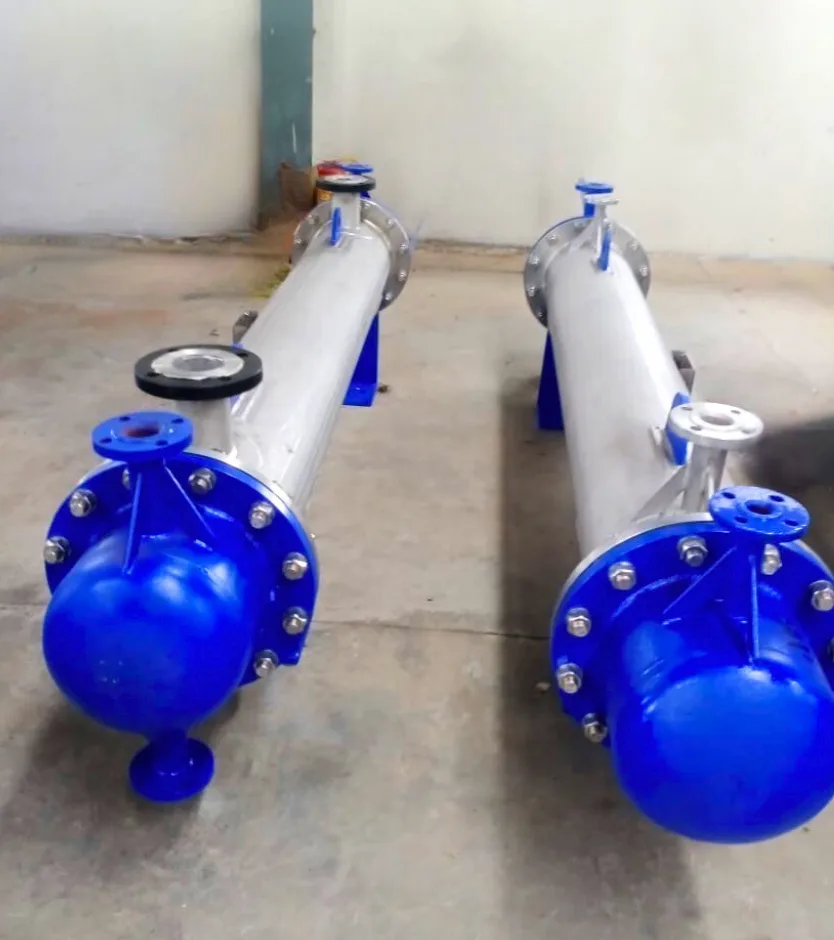
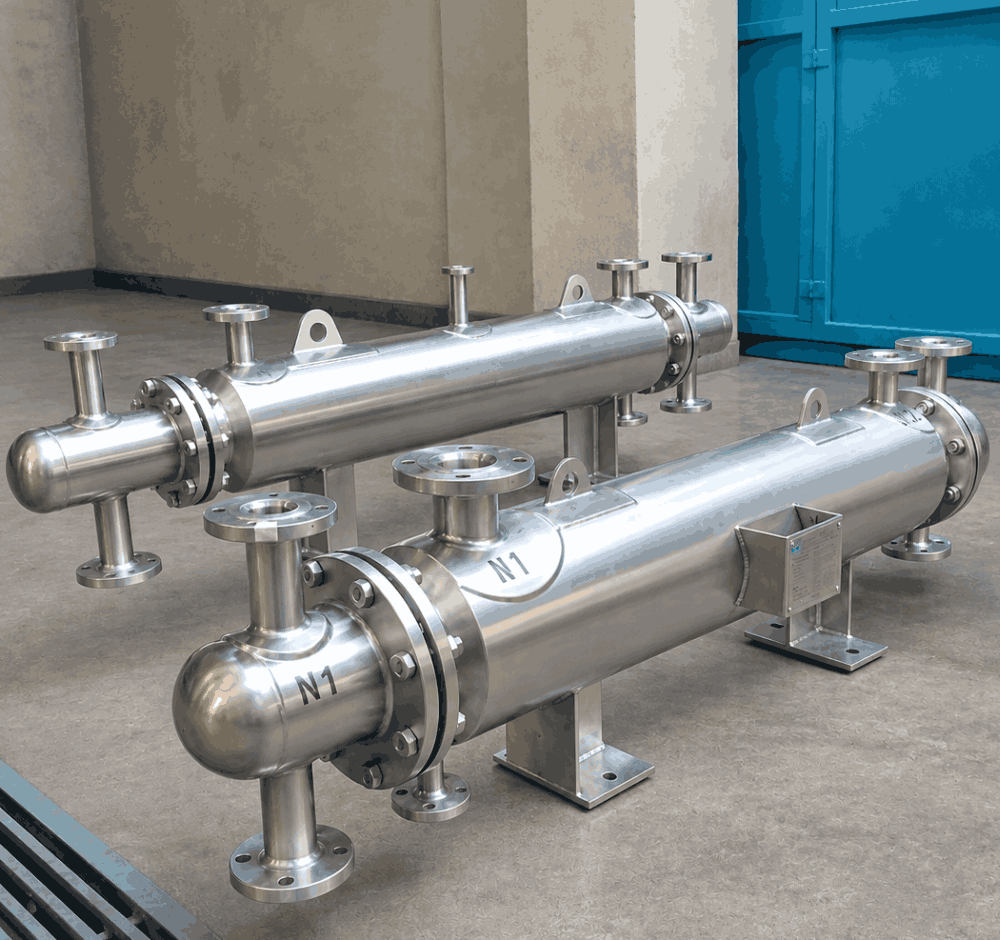
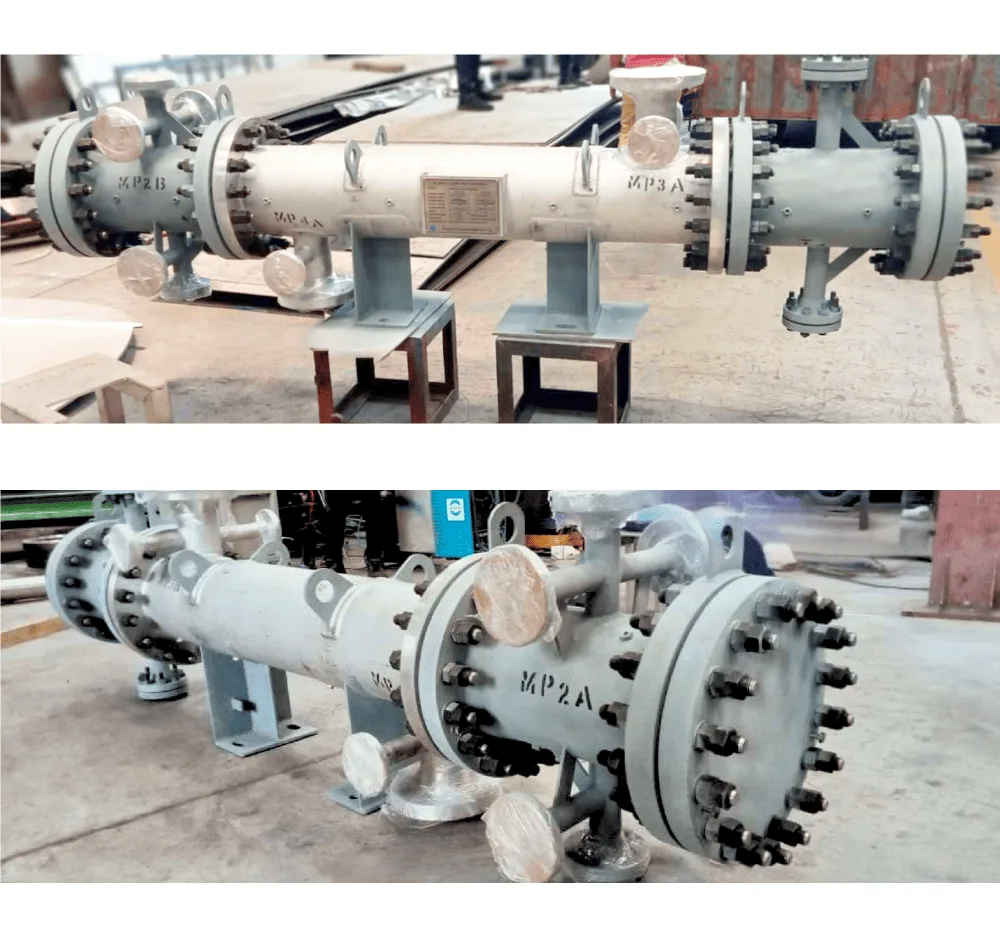
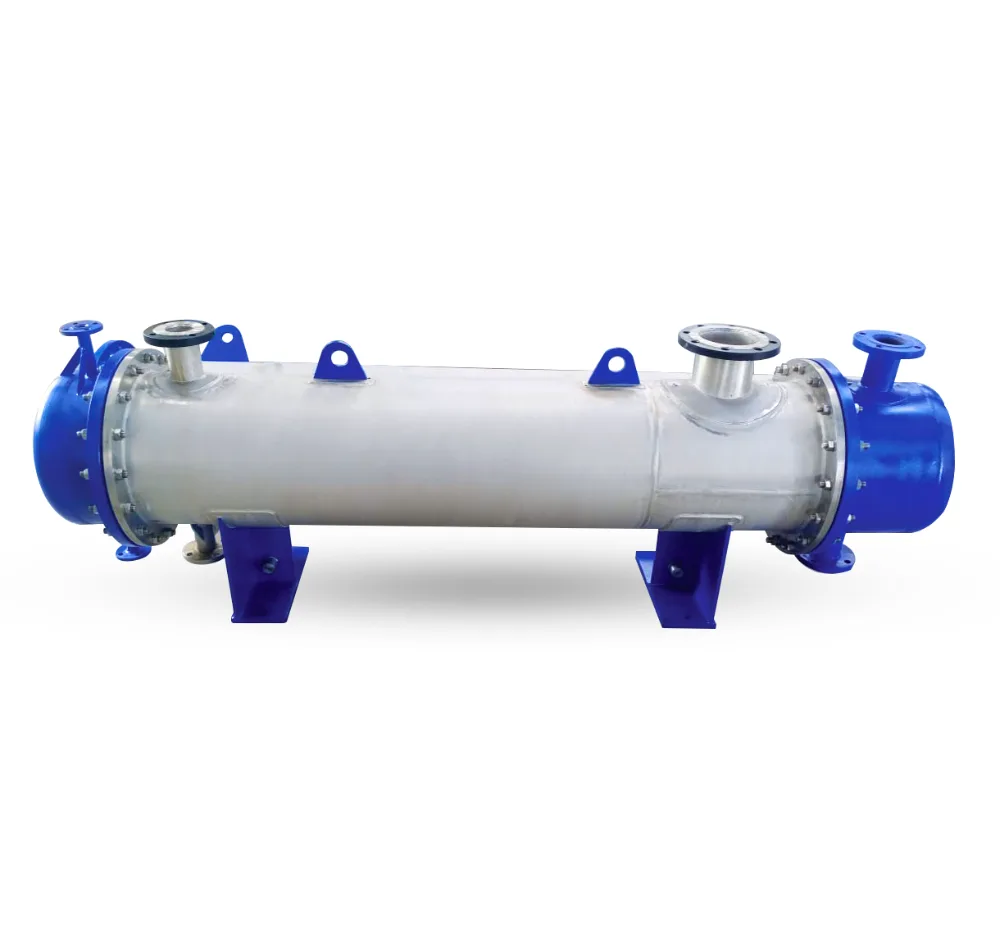
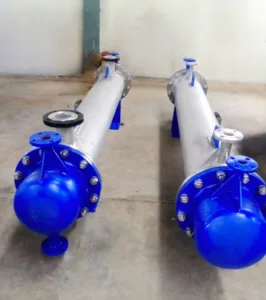
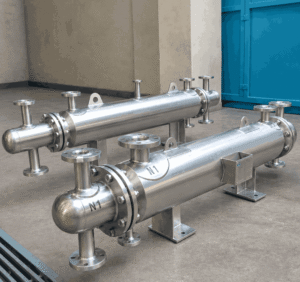
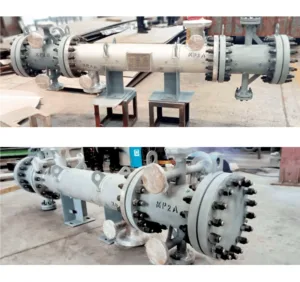
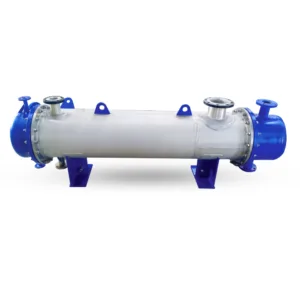
Shell and Tube Heat Exchangers
Padmatech Industries is a leading heat exchanger manufacturer in Pune, supplying custom shell and tube heat exchangers fixed tubesheet, floating head, U-tube and double pipe heat exchangers, from 2 m² to 150 m² in heat transfer area. Units are designed to ASME Section VIII Division 1 and TEMA Class R, C or B, in stainless steel, duplex, super duplex, Hastelloy, copper-nickel and titanium, for chemical, pharmaceutical, agrochemical, oil & gas, food & beverage, wastewater treatment and biotech plants. We are ASME U-Stamp certified and have 21 years of process equipment manufacturing experience. A heat exchanger transfers heat between two fluids without mixing them, and is essential equipment in industrial processes. As a trusted heat exchanger manufacturer in Pune, we design every unit from your actual process conditions.
What Is a Shell and Tube Heat Exchanger?
A shell and tube heat exchanger is a bundle of tubes fitted inside a cylindrical shell. One fluid flows through the tubes and the other flows around them inside the shell, so heat passes through the tube wall without the fluids mixing. We build these for heating, cooling, condensing, evaporation and heat recovery. Duties can be single-phase or involve phase change such as condensing or boiling. Flow is counter-current or co-current, with shell-side baffles creating cross-flow over the tube bank.
Types of Shell and Tube Heat Exchangers We Manufacture
We manufacture three shell and tube configurations, plus a double pipe design for smaller or high-pressure duties. The right one depends on fouling, temperature difference and how the unit will be cleaned.
Fixed Tubesheet: both tubesheets are welded to the shell, giving the lowest-cost construction. It suits clean shell-side fluids, such as condensers and heaters, where the shell side does not need mechanical cleaning.
Floating Head: one tubesheet is free to move and absorbs the thermal expansion between the shell and the tubes. The tube bundle can be withdrawn for shell-side cleaning, which suits fouling services, coolers and reboilers.
U-Tube: the tubes are bent into a U shape and fixed to a single tubesheet, so they expand freely. It is economical for high-pressure or high-temperature-difference duties where the tube-side fluid is clean, since the U-bends are hard to clean mechanically.
Double Pipe Heat Exchanger: unlike the shell and tube designs above, this uses two concentric pipes, with one fluid flowing through the inner pipe and the other through the annulus between the pipes. It suits smaller duties and high-pressure applications, in a compact, easily serviced unit.
Materials of construction for Heat Exchangers
We manufacture heat exchangers in SS 304, SS 316, SS 316L, duplex, super duplex, Hastelloy, titanium, copper-nickel and other alloys, depending on corrosion level and process requirements. Copper-nickel is typically used for seawater or marine cooling duties. Materials are selected on the chloride content, pH, temperature and pressure of each fluid. Shell and tubes can be in different materials, for example an SS 304 shell with SS 316L tubes. Austenitic grades such as 304 and 316 can suffer chloride stress-corrosion cracking at elevated temperatures, so duplex, super duplex or higher alloys are recommended for chloride-bearing services.
Working Principle of a Heat Exchanger
Beyond standard designs, we customize each heat exchanger from your process data heat duty or inlet/outlet temperatures, design pressure and temperature, flow rate, allowable pressure drop, fluid properties and fouling tendency. Thermal sizing and mechanical design are done for these conditions, and drawings are shared for approval before fabrication.
Heat Exchangers Used Across Various Sectors
Pharmaceutical and Biotech: used as reactor and solvent-recovery condensers, vent condensers and product coolers.
Chemical Processing: used as reactor overhead condensers, distillation condensers and reboilers, and feed preheaters.
Refineries and Agrochemical Plants: used for process and utility cooling, heating and condensing duties.
HVAC and Refrigeration: used for hot water and chilled water duties, condensing and cooling.
Power Generation: used for steam condensation and waste heat recovery, including auxiliary duties such as lube oil coolers and steam heaters.
Oil & Gas: used for process cooling, and heating and heat recovery duties across upstream and downstream operations.
Food and Beverage: used for pasteurization, sterilization and product cooling duties, typically in hygienic SS 316L construction.
Wastewater Treatment: used for sludge heating and process fluid cooling in treatment plants.
Our heat exchangers work as condensers, heaters, coolers, evaporators and reboilers in batch and continuous process plants.
Advantages of our Shell and Tube Heat Exchangers
- Suitable for a wide range of pressures and temperatures, and for large duties
- Handle phase-change duties such as condensing and evaporation
- Heat recovery designs reduce fuel or steam consumption and operating costs
- Stable process temperatures support better product quality and smoother plant operation
- Tubes can be plugged or retubed, which extends equipment life
- Standard TEMA construction, so spares and service are easy to source
- Fixed tubesheet design gives quick tube-side access for cleaning by simply removing the channel cover
- Floating head design allows the tube bundle to be withdrawn, so the shell side gets a thorough mechanical clean instead of relying on chemical cleaning alone
- U-tube design allows shell-side cleaning through bundle removal, keeping downtime low for fouling-prone shell fluids
- Double pipe design allows the inner pipe to be withdrawn for cleaning, making it one of the easiest configurations to service
Why Choose Padmatech as Your Heat Exchanger Manufacturer in Pune?
Certified fabrication: ASME U-Stamp and DIN EN ISO 3834-2 welding certification, backed by ISO 9001, 14001 and 45001 systems.
All TEMA classes: we build to Class R, C and B, so construction matches your service.
Process equipment expertise: we also manufacture reactors, receivers, condensers and fermenters, so we understand how the exchanger fits in your complete system.
Local access: our manufacturing units are in Bhosari, Pune. You are welcome to visit for inspection.
Export ready: we supply international projects with quality documentation.
Product Features of Heat Exchanger
Product Specifications of Heat Exchanger
 Hydraulic up-and-down mechanism for easy operation and reduced maintenance.
- High-speed operation up to 2,990 RPM for rapid homogenization and emulsification.
- Multiple impeller options: saw-tooth, rotor-stator, and cowl blade.
- Precision shaft with runout below 3 microns.
- Batch processing time of 30 to 40 minutes.
- Equipment life of more than 15 years.
- Capacity range from 100 to 2,000 litres.
- Manufacturer-stated commitment of 98% uptime.

Capacity
100 to 2,000 litres
Operating speed
Up to 2,990 RPM
Lifting mechanism
Hydraulic up-and-down
Impeller types
Saw-tooth impeller, rotor-stator, cowl blade
Primary functions
Mixing, homogenization, dispersion, emulsification
Hazardous area option
Flameproof motor and panel
Applications
Pharma, chemical, food, paint & ink, foundry chemicals
Material of construction
SS 304 / SS 316 / SS 316L
Frequently Asked Questions
Heat exchangers are used wherever temperature control is required in a process. They are commonly uses in chemical plants, pharmaceutical units, refineries, HVAC systems, and power plants for applications like cooling, heating, condensation, and heat recovery.
Heat exchangers are manufactured using materials like SS 304, SS 316, SS 316L, Duplex, Super Duplex, Hastelloy, and other exotic alloys. The material selection depends on corrosion resistance and process conditions.
Yes, most industrial heat exchangers are designed based on actual process data such as flow rate, temperature range, and pressure conditions. This ensures reliable performance and efficiency in real plant operating conditions.
Selection depends on factors such as temperature, pressure, fluid type, and maintenance requirements. For example, floating head designs are preferred where thermal expansion is high, while fixed tube sheet designs are suitable for simpler and cost-effective applications.
Contact Padmatech Industries for world-class process equipment to boost your business & productivity.

Contact Padmatech Industries for world-class process equipment to boost your business & productivity.